 Get PawLine
Horse Barn Notes
All guidesStart the return log at unloading
PawLine editorial · Published October 20, 2026
Keep travel history with the horse and follow the veterinarian-agreed return plan.
What to know
Minnesota Extension's published guide recommends isolating returning horses for 14 days and monitoring daily for fever, nasal discharge and diarrhea. Discuss how this fits the facility, horse and current conditions with your veterinarian. Do not treat this general page as an individualized release date.
Record travel dates and known contact concerns. Keep equipment cleaning separate from observation entries so neither is assumed complete. Contact the veterinarian about concerning changes rather than waiting for a routine review. An app can organize notes, not certify safe return to the barn group.
Keep this plan with your animal’s notes in PawLine. Get it for iOS · Get it for Android ·
Make the next step clear
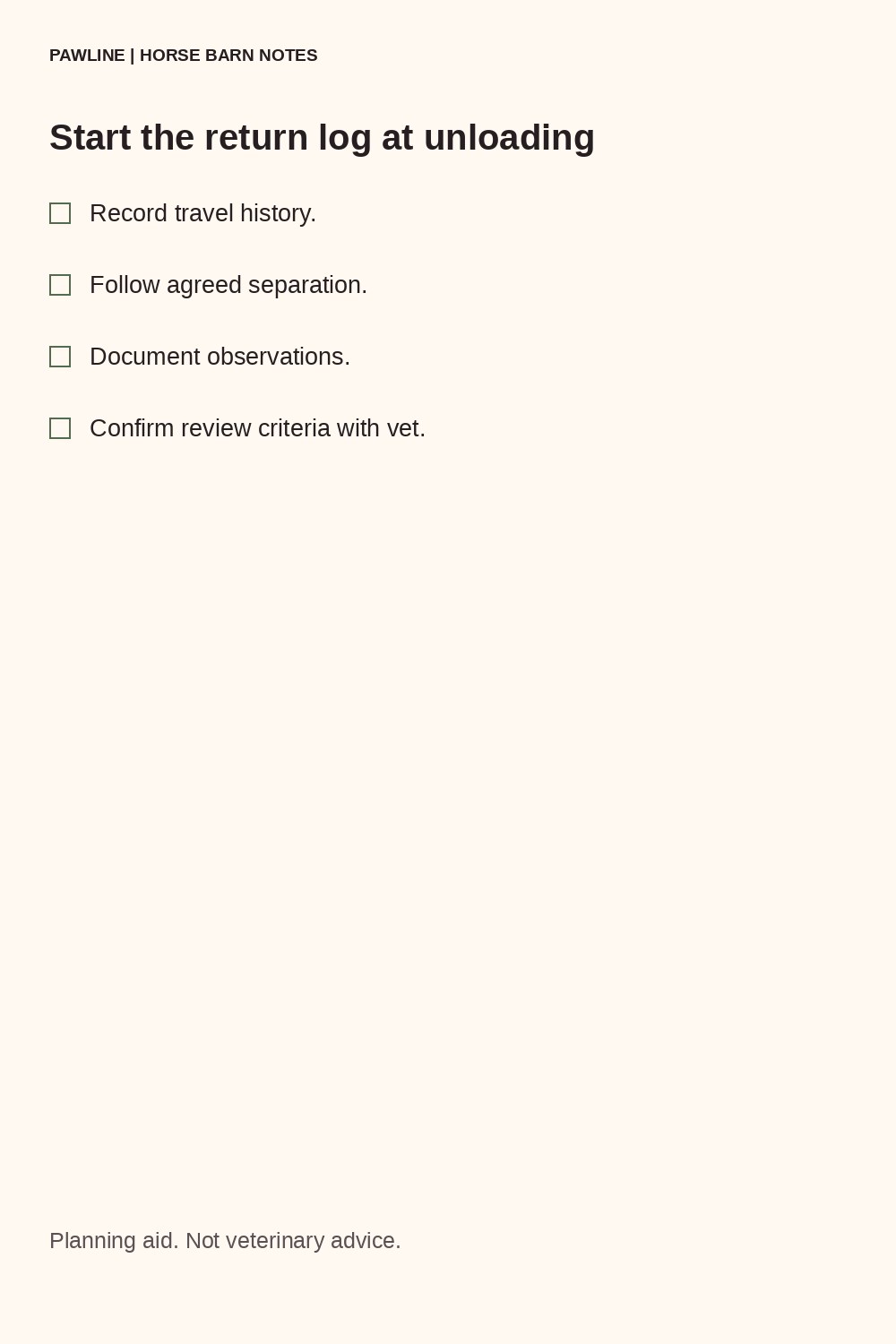
- 1Record travel history.
- 2Follow agreed separation.
- 3Document observations.
- 4Confirm review criteria with vet.
Printable planning sheet
Print this page or copy these labels into your own notebook. These are blank prompts, not data-entry fields. Nothing is saved or sent.
Related guides
The cover sheet every caretaker can find
A barn handoff, not a wall of instructions
The bucket is part of the travel plan
Make the professional visit easier to use
Sources and method
University of Minnesota Extension: horse biosecurity
University of Minnesota Extension: horse care and management
Original planning worksheets informed by the sources above. No clinical review has been completed. Sources checked October 19, 2026. General guidance may not fit your animal or local rules.
Get PawLineQuestions before you use this guide
What should I prepare first?
Keep travel history with the horse and follow the veterinarian-agreed return plan.
Does this guide replace veterinary advice?
No. It is an educational planning aid, not diagnosis, dosing or treatment. It has not yet been individually reviewed by a licensed veterinarian. Talk to your veterinarian about your animal and do not wait for an app response in an emergency.
Open the printable checklist card
Editorial team · Published October 20, 2026